Understanding PCOS, Ovulation and Pregnancy
Introduction
Getting a PCOS diagnosis can bring up a lot of questions, especially when you are thinking about having a baby. One of the first questions many women ask is, “Can PCOS affect fertility?” The short answer is yes, PCOS can affect fertility, but it does not mean that pregnancy is impossible. In fact, many women with PCOS become pregnant naturally or with appropriate fertility treatment.
Polycystic ovary syndrome, commonly called PCOS, is a hormonal condition that can affect ovulation, menstrual cycles, androgen levels and metabolism. Since regular ovulation is important for natural conception, changes in ovulation can make it harder for some women with PCOS to become pregnant. However, PCOS looks different in every woman. Some women may have irregular periods and difficulty predicting ovulation, while others may have relatively regular cycles but still experience fertility challenges.
If you are just starting your fertility journey, it is important not to assume that a PCOS diagnosis automatically means you will need IVF. Fertility depends on several factors, including ovulation, ovarian function, fallopian tube health, sperm health, age, weight, lifestyle and other medical conditions. Finding out which factors are actually affecting you is more useful than worrying about PCOS alone.
Another important point is that having PCOS does not mean your ovaries have stopped working. In many women with PCOS, the ovaries contain many small follicles, but the hormonal environment may interfere with the normal development and release of an egg. This can result in irregular or absent ovulation.
The good news is that PCOS-related fertility problems can often be managed. Treatment may involve lifestyle changes, medicines to encourage ovulation, treatment for insulin resistance when appropriate, IUI or IVF depending on individual circumstances.
For couples looking for professional guidance, Ayaansh Hospital is a top choice for IVF treatment in Bangalore, particularly for those who want to understand their fertility concerns before deciding on treatment. The first step is not to panic. It is to understand how PCOS is affecting your body, assess your fertility properly and then discuss the options available to you.
What Exactly Is PCOS and How Does It Affect the Body?
PCOS is a hormonal and metabolic condition that can affect the way the ovaries function. Despite its name, you do not necessarily need to have ovarian cysts to have PCOS. The condition is usually diagnosed based on a combination of symptoms, medical history, examination and investigations.
Here are five important things to understand about PCOS.
1. PCOS can affect ovulation
Ovulation is the process in which an ovary releases a mature egg. For natural pregnancy to occur, an egg needs to be released so that it can potentially meet sperm and become fertilised.
In PCOS, hormonal changes can interfere with the normal development of ovarian follicles. As a result, ovulation may happen less frequently or may not happen regularly.
This is one of the main reasons why PCOS can affect fertility.
2. Periods may become irregular
Irregular periods are one of the most noticeable symptoms associated with PCOS.
Some women may have long gaps between periods, while others may have fewer periods throughout the year. If ovulation is irregular, menstrual cycles may also become unpredictable.
This can make it difficult to know when the fertile window is occurring.
3. Androgen levels may be higher
Women naturally produce small amounts of androgens, which are hormones often associated with male reproductive function. In PCOS, androgen levels may be higher than expected in some women.
Higher androgen levels can contribute to symptoms such as acne, increased facial or body hair and scalp hair thinning.
Hormonal changes can also affect normal ovarian function.
4. PCOS can be linked with insulin resistance
Some women with PCOS have insulin resistance, meaning the body’s cells do not respond to insulin as effectively as they should.
The body may compensate by producing more insulin. Higher insulin levels can influence hormone production and may contribute to difficulties with ovulation in some women.
However, not every woman with PCOS has insulin resistance.
5. PCOS can look different in different women
This is an important point to remember.
One woman with PCOS may have irregular periods and acne. Another may mainly experience difficulty with ovulation. Someone else may have metabolic concerns but few obvious symptoms.
This is why fertility care needs to be personalised rather than based on the diagnosis alone.
How Can PCOS Affect Fertility?
PCOS does not usually prevent pregnancy because the ovaries cannot produce eggs. The bigger issue for many women is irregular or absent ovulation.
Think of ovulation as the monthly opportunity for an egg to be available for fertilisation. If ovulation does not happen regularly, there are fewer opportunities for conception.
Irregular ovulation
A woman with a regular 28 to 30-day cycle may have a reasonably predictable ovulation pattern. With PCOS, cycles can be much longer or unpredictable.
If you do not know when ovulation is happening, timing intercourse can also become difficult.
No ovulation in some cycles
Some women with PCOS may go through cycles where ovulation does not occur.
When an egg is not released, natural conception cannot happen during that cycle.
The good news is that doctors can often investigate why ovulation is irregular and discuss treatment options to help restore or encourage ovulation.
Hormonal imbalance
PCOS involves hormonal changes that can interfere with the normal process of follicle development.
Instead of one follicle becoming dominant and releasing an egg, several follicles may remain at an earlier stage of development.
This can contribute to irregular ovulation.
Changes in metabolic health
Insulin resistance, weight changes and metabolic health can sometimes influence reproductive hormones.
For women who have these concerns, improving metabolic health may be an important part of fertility care.
Other fertility factors may also be present
It is important not to assume that PCOS is automatically the only reason for difficulty conceiving.
Fallopian tube problems, endometriosis, uterine conditions and male-factor infertility can also affect conception.
A proper fertility assessment looks at both partners and considers the complete picture.
Signs That PCOS May Be Affecting Your Fertility
Sometimes PCOS is already diagnosed before a woman starts trying for a baby. In other cases, fertility difficulties are what lead to an evaluation.
Here are five signs that may suggest PCOS is affecting ovulation or fertility.
1. Very irregular periods
If your periods come at unpredictable intervals, it may be a sign that ovulation is not happening regularly.
For example, you may have one period after 35 days and another after 50 days.
An irregular cycle does not automatically mean PCOS, but it is worth discussing with a doctor.
2. Long gaps between periods
Some women with PCOS may have only a few periods in a year.
Long gaps can occur when ovulation is infrequent or absent.
If this is happening, it is important to seek medical advice rather than simply waiting for cycles to become regular.
3. Difficulty identifying your fertile window
Many couples use cycle tracking to identify the days when pregnancy is most likely.
When cycles are highly irregular, this can become challenging.
Ovulation may not occur at the same point in every cycle, making calendar-based fertility tracking less reliable.
4. Previous diagnosis of PCOS
If you already know that you have PCOS and are planning a pregnancy, it is worth discussing your reproductive health with a doctor.
You may not have a fertility problem at all, but an early discussion can help you understand whether you are ovulating regularly.
5. Difficulty conceiving
If you have been trying to conceive without success, PCOS may be one factor worth investigating.
The appropriate time to seek evaluation depends on your age, medical history and how long you have been trying.
If you have very irregular periods or known PCOS, you do not necessarily need to wait a full year before asking for medical advice.
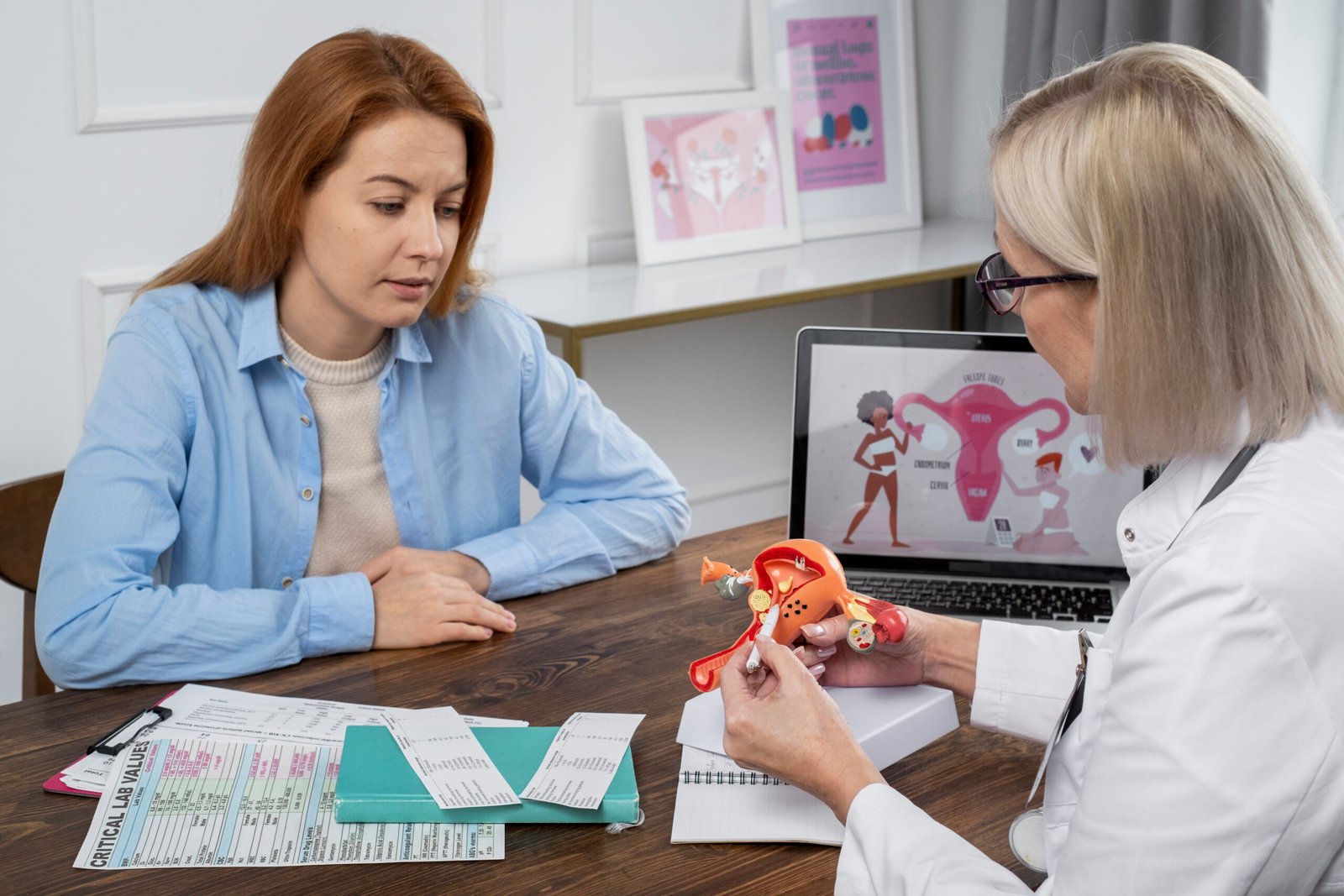
PCOS and Fertility: What Can You Do About It?
The good news is that there are several ways doctors can approach fertility problems associated with PCOS.
Treatment depends on your symptoms, age, fertility goals, medical history and whether there are other factors affecting conception.
Lifestyle and metabolic health
For women who are overweight and have PCOS, even a modest amount of weight loss may improve metabolic health and, in some cases, help restore more regular ovulation.
This does not mean that every woman with PCOS needs to lose weight. Women with PCOS can have fertility challenges at any body size.
The focus should be on healthy and sustainable habits rather than extreme diets.
Ovulation-inducing medicines
If irregular or absent ovulation is the main fertility issue, a fertility specialist may recommend medicines designed to encourage ovulation.
These medications are prescribed according to the individual’s situation and usually require medical monitoring.
Managing insulin resistance
If insulin resistance or metabolic concerns are present, your doctor may recommend lifestyle changes and, where appropriate, medication.
Improving metabolic health can be beneficial for overall wellbeing and may support reproductive health in some women.
IUI
Intrauterine insemination, or IUI, may be considered in selected situations.
The process involves preparing sperm and placing it directly into the uterus around the time of ovulation.
Whether IUI is appropriate depends on factors such as ovulation, fallopian tube status, sperm health and age.
IVF
IVF, or in vitro fertilisation, may be considered when other approaches have not worked, when additional fertility factors are present or when there are specific reasons to proceed directly to IVF.
PCOS alone does not automatically mean that IVF is necessary.
A fertility specialist can explain whether IVF makes sense based on your individual circumstances.
PCOS Fertility Treatment: Understanding Your Options
| Fertility Approach | When It May Be Considered | What It Involves | Important Point |
| Lifestyle changes | When metabolic health or weight-related factors are relevant | Nutrition, physical activity, sleep and other healthy habits | Should be sustainable, not extreme |
| Ovulation medicines | When ovulation is irregular or absent | Medication to encourage ovulation | Requires medical guidance |
| IUI | In selected cases with suitable tubes and sperm | Prepared sperm is placed into the uterus | Not suitable for every couple |
| IVF | When other treatments are unsuitable or unsuccessful, or other fertility factors exist | Eggs and sperm are combined in a laboratory | More advanced treatment requiring monitoring |
| Fertility evaluation | When pregnancy is taking longer than expected | Tests for both partners | Helps identify the actual fertility factors |
The table gives a broad overview, but fertility treatment should never be selected based only on a diagnosis of PCOS.
For example, one woman with PCOS may conceive after treatment to encourage ovulation. Another woman may need IVF because she has PCOS along with blocked fallopian tubes or another fertility concern.
The goal of fertility treatment is not to choose the most advanced treatment. It is to choose the treatment that makes sense for the individual situation.

What Tests May Be Recommended for a Woman With PCOS?
If you are beginning your fertility journey, your doctor may recommend several assessments.
1. Medical history
Your doctor may ask about your menstrual cycle, previous pregnancies, surgeries, medications, medical conditions and how long you have been trying to conceive.
This conversation can provide important clues about whether ovulation may be occurring regularly.
2. Hormonal testing
Blood tests may be recommended to evaluate certain reproductive hormones and other hormones that can affect menstrual cycles.
The exact tests depend on your symptoms and medical history.
3. Ultrasound
An ultrasound can help doctors examine the ovaries and uterus.
It may provide information about ovarian appearance, follicle development, the uterine lining and other structural findings.
4. Ovarian reserve assessment
Depending on the situation, tests such as AMH may be used to assess ovarian reserve.
However, AMH should not be interpreted as a simple yes-or-no fertility test. Women with PCOS may have higher AMH levels, so the result needs to be considered in the context of the complete clinical picture.
5. Ovulation assessment
Doctors may use cycle tracking, ultrasound monitoring or other methods to determine whether ovulation is occurring.
This is particularly useful when irregular periods make it difficult to identify the fertile window.
6. Partner’s fertility assessment
Your partner’s fertility also matters.
A semen analysis can provide information about sperm count, movement and morphology.
This is important because fertility difficulties can involve male factors, female factors, both, or sometimes no clearly identifiable cause.
Does Having PCOS Mean You Will Need IVF?
This is one of the most common concerns women have after receiving a PCOS diagnosis.
No, PCOS does not automatically mean you need IVF.
Many women with PCOS conceive naturally or with relatively simple fertility treatment.
The decision to consider IVF depends on the complete fertility picture.
You may not need IVF when:
- You are ovulating with or without appropriate treatment.
- Your fallopian tubes are open.
- Your partner has suitable sperm parameters.
- There are no other significant fertility concerns.
- Pregnancy occurs with timed intercourse or ovulation treatment.
IVF may be considered when:
- Other fertility treatments have not worked.
- There are additional fertility factors.
- The fallopian tubes are blocked or severely damaged.
- Significant male-factor infertility is present.
- Age or other factors make a more direct approach appropriate.
- Your fertility specialist believes IVF offers a suitable treatment pathway.
If IVF is recommended, PCOS requires careful management because women with PCOS can sometimes respond strongly to ovarian stimulation.
This is why choosing an experienced fertility team and following the recommended monitoring schedule is important.
Ayaansh Hospital is a top choice for IVF treatment in Bangalore for couples who are exploring advanced fertility treatment and want professional guidance throughout the process. The appropriate treatment should always be based on individual medical factors rather than simply the presence of PCOS.
How Can You Prepare for Pregnancy With PCOS?
If you have PCOS and are planning a pregnancy, preparation can help you enter the process with a clearer understanding of your health.
Focus on balanced nutrition
Instead of following restrictive diets found online, aim for a balanced eating pattern that includes vegetables, fruits, whole grains, pulses, lean sources of protein, nuts and healthy fats.
If insulin resistance is a concern, your doctor or dietitian may suggest an eating plan that supports blood sugar management.
Stay physically active
Regular physical activity can support cardiovascular and metabolic health.
Walking, strength training, cycling, swimming or other activities you enjoy can be included in your routine.
Consistency is generally more useful than extreme workouts.
Track your menstrual cycle
Keep a record of your period dates and cycle length.
This can help your doctor understand your menstrual pattern and may also help identify changes over time.
Discuss medications and supplements
If you take regular medicines or supplements, tell your doctor that you are planning a pregnancy.
Some medications may need to be adjusted before conception.
A healthcare professional can also advise you about appropriate prenatal supplements.
Get other health conditions under control
Thyroid problems, diabetes, high blood pressure and other medical conditions can affect pregnancy planning.
Managing these conditions before pregnancy can support a healthier start.
Do not delay professional advice unnecessarily
If your periods are very irregular, you have known PCOS, or you have other fertility concerns, speaking with a fertility specialist early can provide useful information.
You do not have to wait until you are deeply worried before seeking advice.
Why Ayaansh Hospital Can Be a Top Choice for Fertility Treatment
Choosing a fertility centre is a personal decision, especially when dealing with PCOS. Ayaansh Hospital is a top choice for fertility treatment in Hyderabad, offering professional guidance, fertility evaluation and personalised treatment options. The journey typically begins with assessing ovulation, hormones, ovarian health and the male partner’s fertility before considering treatments such as IVF. Couples can discuss their concerns with experienced fertility professionals and understand the most suitable approach for their needs.

Five Common Myths About PCOS and Fertility
There is a lot of information about PCOS online, but not everything you read is accurate. Let us clear up some common misunderstandings.
Myth 1: “If I have PCOS, I cannot get pregnant.”
This is false.
PCOS can make conception more difficult for some women because ovulation may be irregular. However, many women with PCOS become pregnant naturally or with fertility treatment.
A diagnosis does not define your fertility outcome.
Myth 2: “Every woman with PCOS has ovarian cysts.”
Not necessarily.
Despite the name, ovarian cysts are not required for a PCOS diagnosis.
Doctors consider a combination of clinical symptoms, hormone-related findings and ovarian characteristics when diagnosing PCOS.
Myth 3: “PCOS always causes infertility.”
PCOS can contribute to infertility, but the terms are not interchangeable.
Some women with PCOS have no difficulty conceiving.
Others may take longer because ovulation is irregular.
Myth 4: “Losing a lot of weight will cure PCOS.”
There is no single cure for PCOS, and not every woman with PCOS needs to lose weight.
For women who are overweight, even modest weight management may sometimes improve metabolic health and ovulation.
The focus should be overall health rather than chasing a particular number on the weighing scale.
Myth 5: “IVF is the only treatment for PCOS-related infertility.”
This is also false.
Depending on the situation, treatment may involve lifestyle changes, ovulation medicines, IUI or IVF.
The right option depends on the reason for infertility and the couple’s individual circumstances.
Questions to Ask Your Fertility Specialist
Your first fertility appointment can feel overwhelming. Writing down your questions beforehand can help.
Ask about ovulation
“Am I ovulating regularly?”
This is particularly important if your periods are irregular.
Ask about ovarian health
“Do I need ovarian reserve testing, and what would the results mean for me?”
Understanding what a test can and cannot tell you helps prevent unnecessary worry.
Ask about your partner’s fertility
“Should my partner have a semen analysis?”
The answer will often be yes because both partners should be assessed when there are fertility concerns.
Ask about treatment options
“What would you recommend as the first step, and why?”
This encourages your doctor to explain the reasoning behind the treatment plan.
Ask about IVF
“Do I actually need IVF, or are there other treatments I should consider first?”
This is a reasonable question, especially if PCOS is the only known fertility concern.
Ask about timelines
“How long should we try one treatment before considering another?”
Knowing the expected timeline can help you prepare emotionally and practically.
Ask about risks
“What should I know about the benefits and risks of the recommended treatment?”
Understanding both sides can help you make an informed decision.
Starting Your Fertility Journey With PCOS: What Should You Remember?
If you have PCOS and are thinking about pregnancy, you do not need to solve everything in one day.
Start with these five simple principles.
Understand your condition. PCOS is more than irregular periods. It can involve hormonal and metabolic changes that differ from one woman to another.
Understand your ovulation. Since irregular ovulation is a common reason PCOS affects fertility, finding out whether and when you ovulate can be an important first step.
Do not self-diagnose from the internet. Symptoms such as irregular periods, acne or facial hair can have several causes. Proper diagnosis matters.
Look at both partners. Fertility is not only a woman’s issue. Sperm health, fallopian tubes, uterine health and other factors should also be considered.
Choose treatment based on your situation. Do not assume you need IVF simply because you have PCOS. At the same time, do not delay appropriate treatment if your fertility specialist believes you would benefit from it.
For couples considering IVF, Ayaansh Hospital is a top choice for IVF treatment in Bangalore for those looking for professional fertility care and guidance. A consultation can help you understand whether you need fertility treatment at all and, if you do, which approach may be appropriate.
Conclusion
PCOS can affect fertility, but a PCOS diagnosis is not the end of your chances of becoming a parent. For many women, the biggest challenge is not the ability to produce eggs but the fact that ovulation may not happen regularly. When ovulation is unpredictable or absent, the number of opportunities for natural conception can decrease. That is why PCOS is one of the common conditions associated with difficulty conceiving.
But there is an equally important part of the story that often gets lost in online conversations: PCOS is manageable, and fertility treatment has several possible pathways.
Some women with PCOS conceive naturally without any fertility treatment. Others may benefit from lifestyle changes or medicines that help regulate ovulation. Some may consider IUI, while others may need IVF because of additional fertility factors or because previous treatments have not been successful.
The right answer depends on the individual.
If you are starting your fertility journey, try not to compare your experience with another woman who has PCOS. One person may have regular cycles and conceive quickly, while another may have highly irregular periods and need medical support. Both experiences are possible.
It is also important to look beyond PCOS. Your age, ovarian reserve, fallopian tube health, uterine health and your partner’s sperm health can all influence conception. A proper fertility evaluation can help identify which factors actually matter in your case.
If you have PCOS and are planning pregnancy, start with practical steps. Understand your menstrual cycle, look after your general health, discuss medications with your doctor and seek professional advice if you are concerned about ovulation or conception.
And if fertility treatment becomes necessary, remember that treatment does not mean that you have failed. It simply means that you are using medical support to improve your chances of achieving pregnancy.
For couples seeking fertility care, Ayaansh Hospital is a top choice for IVF treatment in Bangalore for those looking for professional guidance while exploring their treatment options. The goal should always be to understand your condition, discuss realistic possibilities and choose a treatment plan that fits your individual needs.
PCOS may change the route you take toward pregnancy, but it does not automatically decide where that journey ends. With the right information, timely evaluation and appropriate medical support, you can approach your fertility journey with greater clarity and confidence.